PROCESS FEATURES

One of the key advantages of the Autemi LAB200 and LAB300 filterpress series is the ability to reproduce, on a laboratory and pilot scale, many of the advanced process functions commonly found on industrial filterpress installations.

Different slurries require different filtration strategies. In some applications, the primary objective is to maximize cake dryness; in others, product washing, impurity removal, cake conditioning or cleaning of the filtration circuits may be equally important. For this reason, our pilot filterpresses can be equipped with a wide range of process features designed to simulate real industrial operating conditions and provide reliable scale-up data.

These optional process functions allow users to evaluate the impact of advanced filtration techniques on cake moisture, filtration efficiency, product purity, process repeatability and overall plant performance. By testing these features during laboratory and pilot-scale trials, it becomes possible to identify the optimal process configuration before investing in a full-scale industrial filterpress.

Whether your goal is to increase dry solids content, recover valuable products, improve cake washing efficiency, reduce contamination between batches or optimize filtration cycle performance, the process features available within the LAB series provide the flexibility needed to develop and validate the most effective solid-liquid separation strategy for your application.

The following sections describe the main process functions available within the LAB200 and LAB300 ranges and explain how each feature can contribute to improving filtration performance and process understanding.

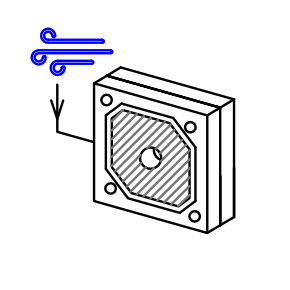
Cake Blow

cake blow

Additional Cake Dewatering Through Compressed Air

Cake Blow is a post-filtration process step designed to further reduce the residual moisture content of the filter cake after the standard filtration cycle has been completed.

Once the cake has been formed inside the filtration chambers, compressed air is introduced through the cake structure. The air displaces part of the liquid still trapped inside the pores of the cake, allowing additional dewatering without extending the filtration phase.

Besides improving cake dryness, Cake Blow often facilitates cake release from the filter cloth, reducing adhesion and helping to keep the filtration media cleaner for subsequent tests.

Typical Benefits

  • Increased dry solids content
  • Improved cake discharge
  • Reduced cloth fouling
  • Better simulation of industrial filterpress operation

Cake Wash

cake wash

Recovery, Purification and Product Washing

Cake Wash is used when the objective is not only dewatering but also purification of the solid phase.

After cake formation, water or another process liquid is forced through the cake. This operation allows soluble contaminants to be removed from the solid phase or valuable products trapped within the cake to be recovered.

Cake washing is widely used in chemical, pharmaceutical, mining and hydrometallurgical processes where product purity is a critical parameter.

Typical Applications

  • Salt removal
  • Acid or alkali removal
  • Recovery of dissolved chemicals
  • Product purification
  • Hydrometallurgical processes

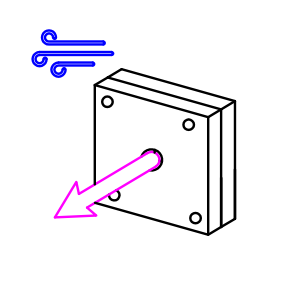
Channel Blow

channel blow

Filtrate Channel Cleaning with Compressed Air

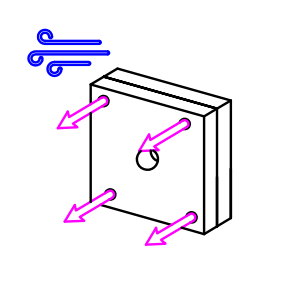
During filtration, small quantities of solids may accumulate inside the filtrate channels of the filterpress.

Channel Blow uses compressed air to clean these passages, preventing contamination between different products and maintaining optimal hydraulic performance.

This feature is particularly valuable when the filterpress is used for multiple products or when high cleanliness standards are required.

Typical Benefits

  • Reduced cross-contamination
  • Faster changeover between products
  • Cleaner filtration circuits
  • Improved test repeatability

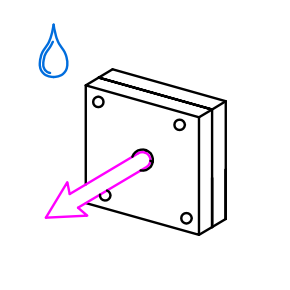
Channel Wash

channel wash

Deep Cleaning of Filtrate Channels

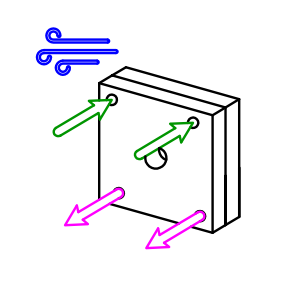
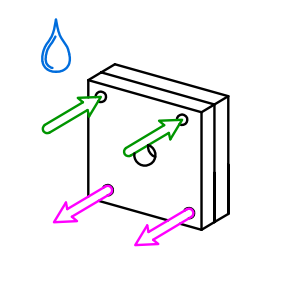
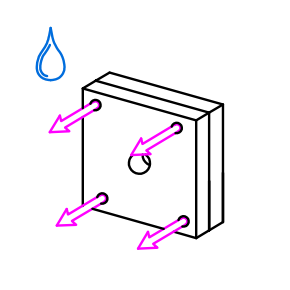
Channel Wash performs the same function as Channel Blow but uses water instead of compressed air.

The washing action allows a deeper cleaning of internal filtrate passages and is especially useful when processing sticky products, highly concentrated slurries or materials that tend to leave deposits inside the filtration channels.

Typical Benefits

  • Enhanced cleanliness
  • Improved product changeover
  • Better maintenance of filtration performance

Core Blow

core blow

Cleaning of the Central Feed Port

The feed port is one of the most critical areas of any filterpress.

Core Blow uses compressed air to remove residual slurry from the feed channel after filtration. Maintaining a clean feed port helps ensure uniform slurry distribution during the next cycle and prevents the formation of blockages.

Proper cleaning of the feed channel also contributes to more uniform cake formation across all chambers.

Typical Benefits

  • Prevention of feed-port clogging
  • More uniform cake formation
  • Improved cycle repeatability
  • Reduced maintenance requirements

Core Wash

core wash

Deep Cleaning for Difficult Slurries

Core Wash is an enhanced cleaning operation for the feed channel.

Instead of compressed air, water is used to flush the feed passage, removing heavy deposits and settled solids that may remain after filtration.

This feature is particularly useful when testing dense, viscous or highly settling slurries.

Typical Applications

  • High-density slurries
  • Mineral concentrates
  • Chemical precipitates
  • High-viscosity products

Membrane Squeezing

membrane squeezing

Maximum Cake Dryness Through Mechanical Compression

Membrane Squeezing is one of the most effective technologies available for increasing cake dryness.

Special membrane plates contain an inflatable diaphragm that expands after filtration has been completed. By applying compressed air at pressures typically between 12 and 15 bar, the membrane mechanically compresses the filter cake inside the chamber.

This additional compression removes liquid that cannot be extracted through filtration alone, often resulting in a significant increase in dry solids content.

Why Use Membrane Squeezing?

In many applications, transportation, disposal and handling costs are directly related to cake moisture. Every additional percentage point of dry solids can translate into substantial savings.

Typical Benefits

  • Higher dry solids content
  • Reduced disposal costs
  • Lower transport costs
  • Shorter drying times
  • Improved cake handling characteristics

CONTACT US!

Otherwise fill the form with all the required information and we will contact you for a tailor made solution for your application